It is often interesting to hear what people are reading, giving an insight into books that we ourselves, may like. That which calls our attention, and then our reflections upon, can only come from the individual lens from which we look out. For each of us this is intimately personal. Mostly I read to interrogate my own depths, looking to the vision of others to shine light into hidden, unknown or unexpected corners. Thus, the pleasure in reading.

Looking back over my summer reading there is a distinct theme of womanhood, not totally intentional. My lens is palpably feminine. I started the summer break with two books that particularly report from their own outlook; Clementine Ford’s, Boys Will Be Boys : power, patriarchy and the toxic bonds of mateship, 2018, and In the Dream House by Carmen Maria Machado, 2019. I use both the university and the public library to access books. I had been wanting Ford’s 2023, I Don’t : the case against marriage, but it was not available – a dilemma I regularly face. Oh, well, there are whole libraries of other books to choose from. My intention is not to review books, simply reflect upon them. Ford’s work, in a larger use of the word, aims to open eyes, put political pressure on, and change society for the better, hence she has a strong home-based Australian focus. Much of Boys Will Be Boys however, covers international episodes and is universal. The first part of the book discusses general concepts both intensely disturbing for women, and galvanising. She does however, pepper her informal writing with humour. I skipped the last third, as it had become a long list of named men and their appalling and dangerous behaviour. She is calling them out. It was list already known via news reports. Her conclusion however, pulls the ramifications together. Earlier in the book she wrote of her young son and concerns of how he must navigate this patriarchal and misogynist world without being trained to turn into one himself. As one who teaches a gender paper, this was as an aspect I hoped to see her expand upon. It is also where I see hope lies. (If interested though, there is much academic work on this subject).

I was drawn to Carmen Machado’s writing after reading her essay included in What My Mother and I Don’t Talk About : fifteen writers break the silence. They (Machado), has an especial personal relationship to their writing, and this is strong with In the Dream House. Written as a reflective diary in fragments relating to specific confessional instances, the book is a way of their processing their trauma from experiencing an abusive relationship. The abstract for the book states, ‘The result is a powerful book that explodes our ideas about what a memoir can and could be.’ Using the second-person Machado speak both to us directly, and themselves internally. Lesbian couples, in fact any type of couple, are just as prone to abusive relationships as heterosexual ones, but with the increased weight of not wanting to be exposed in a society where they are more vulnerable – as the gender-diverse work towards acceptance. From the start to the end of the book we go through this relationship with them sharing the unravelling and disbelief that the loved and loving partner could so cruelly hurt, manipulate and control, using power and fear. Many readers will recognise such experiences. Using the running theme of the Dream House, most of the short pieces that form the unfolding narrative are couched within folktale, myth or fable, frequently referencing the 1950s tome, Motif-Index of Folk Literature. This results in beguiling reading, and also creates an atmosphere of detachment – the writer, and the reader, struggle to apprehend and accept the true nature of what is taking place, so reflective of real life – which this is.
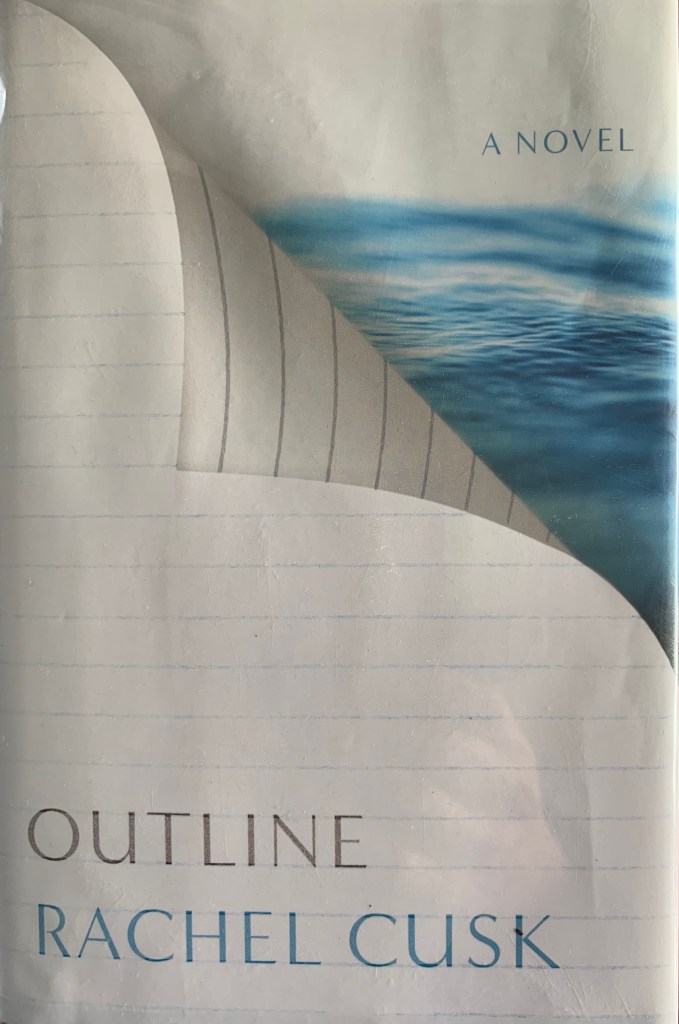
Another writer who I am pleased to discover, and who also has a unique style is Rachel Cusk. A prolific writer she has produced several fictions and non-fictions as well as numerous essays. She is one of those writers who I love reading about her own insights on her work. For instance in an interview regarding her 2021 novel Second Place, which I look forward to reading, she discusses the “feminine non-state of non-being”. During this interview her conversation style uses the second-person again, giving that sense of self-reflection both for her and for us. My exploration into Cusk’s writing has begun with the first of the Outline trilogy. I was alerted to this author via an article relating to the work of Annie Ernaux and a discussion of writers whose work opaquely blurs fiction with autobiography. Much has been written on The Outline Trilogy so I need not go over this well tread land. What I was enamoured by Outline A Novel was the craft of the writing, simplistic on the surface, deep in its under layers. This was written in the first person from the point of view of a woman writer and her encounters with both old friends and strangers. Our writer describes these people with disarming directness yet in such a detached way she is almost detached from her own existence. We drift seamlessly across her interior thoughts, and dialogue that is, for the most part, as if being related to us in a later conversation, along with story-telling from the point of view of the other characters. While judging these characters we judge ourselves.

Debra Levy’s Things I Don’t Want To Know : a response to George’s Orwell’s 1946 essay ‘Why I Write’ (2013), has similarities but is non-fiction, somewhat blurred. My intrigue piqued from this book led me to The Man Who Saw Everything (2019). Levy is a master of her craft. This narrative unravels while unraveling our sense of time and place. When you read it and reach your ‘aha’ moment you will see why this works so brilliantly.
I was blown away by Toxic Childhood Stress: The Legacy of Early Trauma and How to Heal by Nadine Burke Harris. This is a non-fiction I feel everyone should read. The Burke Foundation website covers much of the factual information and science behind what is self-explanatory from the book’s title. This seemingly super-human woman describes the journey through her medical study and work slowly undoing this super-human to reveal a life that has experienced all the success and hurts of living. She however, is not the focus. It is her patients that count and her findings that show the major long-term health detriments of childhood trauma; and it is government and society that can change this.


Lastly, two art books which were both fittingly tactile as well having good quality visuals – enjoyment of any object is enhanced by sensory experience. The hardcover, The Story of Art Without Men by Katy Hessel is a beautiful book with coloured gloss pages between sections, and crammed full of images of much of the visual art discussed. Published in 2022 this is another book that has had a lot of air time, so I need not go into great detail. Suffice to say it is splendidly done and adds greatly to the history of art. The book includes an excellent glossary and timeline. I can imagine the tremendous amount of work that went into it and admire an author who can consider more than 300 artworks without sounding repetitive! Many of the artists discussed are among names we art historians are well aware of. But many have only been recognised in recent times since second wave feminism in the 1970s began unearthing those buried under the male canon. Research in present times are continuing to discover more, and not only discover these women artists but find a number of them were responsible for new movements and styles previously attributed to revered men. Here I would like to quote painter Marie Bashkirtseff (1858-1884), “To die! My God, to die! To die without leaving anything behind me? To die like a dog, like hundreds of thousands of women whose names are barely engraved upon their tombs?” I noted in Hessel’s documenting of her women artists, that over and over again were stories of genuine struggle.

This too can be found in Jennifer Higgie’s 2023 (soft covered) book The Other Side : A Journey Into Women, Art and the Spirit World. Higgie, however, zones in on women artists who embraced spirituality and brought it into their art and lives. This is a book of its time, when some on our planet look to nature with its infinite wisdom, as we grapple with the over-using of and damage to our planet, that human technological development has precipitated. Higgies describes how these artists perceived that there is ‘a beyond the material’ – at least this is how I express it, this, of course, being counter to the capitalist system which weighs heavily upon us. Ending this piece on The Other Side, takes me nicely to my next, soon-to-come, post which is on a exhibition by a local woman artist. Higgie, I’m sure would agree with my words, that we women should connect with, and express our feminine spirituality. To quote Jennifer Higgie, ‘To trust in art is to trust mystery’.
Love and peace, Bice
 Bice Grace Lapin