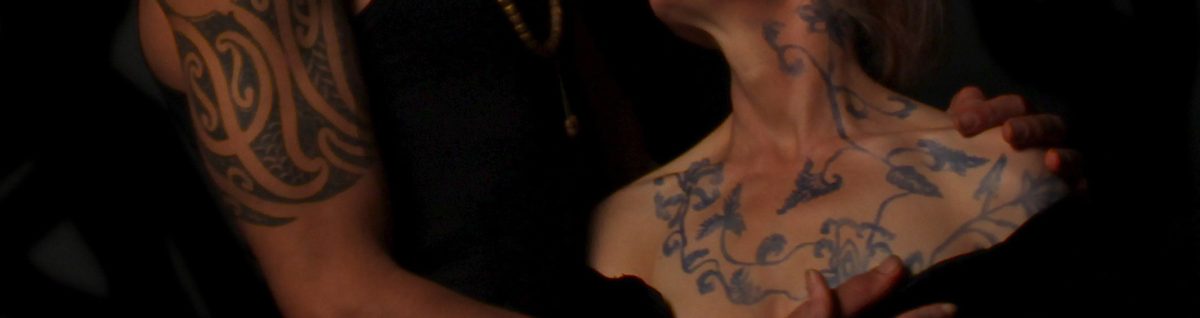

Follows is an extended version of my contribution to the book Otherhood – Essays on being childless, childfree and child adjacent, edited by Alie Benge, Lil O’Brien and Kathryn Van Beek and published May 2024 by Massey University Press.
This version has the addition of my interrogation into the concept of ‘the Other’ both from my art theory background and in light of the topic of the book.
13–20 minutes
“Can you come to my birthday party? I’m going to be four!” A request I received with both delight and trepidation. Delight that this little boy liked me enough to have me at his party, and apprehension at my ability to fit in and enjoy the experience. I need not have worried.

I had only just met this little guy. He had come to visit with his parents and baby sister. Asleep in the car when they arrived, he later emerged groggy and timorous, hiding behind his mother. My warm inclusion of him in conversation soon had him out of his shell and he displayed an excellent vocabulary, unsurprising given his mother is a writer and an English teacher. He had dark eyes and a mop of hair, every bit as you can imagine a boy with an Italian father would have. As we walked around my rural land visiting the animals and orchard, he danced around with the kind of enthusiasm for life that has a magnetising pull. We played as he chased me with his toy dragon creating mini scenarios, and walked alongside me as we all returned to the house, animatedly talking of all manner of things, including with much excitement, his up-coming party. As the family were preparing to leave, his request came…followed by, “You can come if you have children”.

I felt dual disappointment and relief, along with a lack of surprise. After all, I had lived my adult life without invitations to children’s birthday parties, baby showers, or twenty-firsts. I never quite understood this. There seems to be an implicit feeling that people without children are not interested, do not like them, have better things to do. Is that the parents projecting? Do I not interact well with children? Am I a scary witch?
My confusion about this phenomenon of missing invitations is further amplified by close friends wanting me to be interested in their children - they know I care and I, in turn know they care about me. “You are their godmother, unofficially, [I don’t remember being asked], so if anything happens to us you will look after them,” [a statement not a question].
“If the Other has no form, the One ceases to exist.”
Olu Oguibe
Where I live l have limited family. My parents were immigrants, hence I missed out on having extended family. I especially envied people who had grandparents. My greater family are on the other side of world, and are very European with their sense of history and connection. My father’s younger brother later joined my parents in seeking a life here in Aotearoa. He married a New Zealander and had two sons, my dear cousins. There were four children in my immediate family and we two families, being all we had, were close, sharing events and celebrations together, even as we children reached young adulthood, even after both sets of parents had separated. My siblings left Ōtepoti. My younger brother, while still young was thrown into fatherhood and a difficult relationship. While my niece grew up she spent a great deal of time with me. She lived in other towns but visited for school holidays and more when her parents needed breaks. We’ve remained close, but she too lives in another country now. It is as if diaspora is in the blood, although one could say that for many families of Aotearoa. I wonder if I had been surrounded by family if things would have been different for me.

My older brother lived in Thailand, and he and his Thai wife adopted their twin nieces after their biological parents died. My older sister married in Melbourne and had three boys. I have no doubt that had we all lived in the same place I would have joyfully received regular birthday party invitations. Of my two cousins one never had a family, but the other married and had two children. Still, it is as if it never occurred to them to that I might like to be included in events important to the children as they grew, this, despite my interest in them and their fondness for me. Yet, it seems, their friends with children participated in birthday parties. But, not I, the childless, not I, the ‘Other’.

This term, the Other is used in many varied ways. The concept seems so ingrained in Western ways of seeing that we can often forget to question it. Until we are on its wrong side, even at times in white, privileged worlds. Our lives are ruled by views of the self, the ego, our identity. As we grow through our childhood years a sense of unease develops, like dust in the sunlight that begins to settle on our bodies. Who we are, where we came from, who we belong to. The occasional schoolyard taunt or bitter retort, (in my case, 'you Dutch came and took all our jobs'. My parents had difficulty getting good work), and soon we have teenage angst. We are all Other in some form or another, that becomes clear, or at least if we have a level of self-awareness.
“For the old Cartesian dualisms and the fragmented dreams are no longer working, in science, in material matters, or in human affairs”
Anne Salmond
How did we get to this place? The Other is part of Western metaphysics and most often comes up in racial and cultural, as well as feminist and gender, discussions. It is found in religion, phenomenology and philosophy. Anthropologist Anne Salmond in Tears of Rangi : Experiments Across Worlds, (2017) points to roots in Christianity and binary opposites - the “old idea” of the Genesis story, the Great Chain of being and hierarchy. Under God at the top are civilised people, below which are barbarians, savages, ranks of animals, then plants, and down to primeval darkness. And the civilised ‘people’ are men who rule over all else. (59-60). Ultimately this negative social conditioning is based upon power and control. Such is made clear in Edward W. Said’s 1978 book, Orientalism, influential to post-colonial theory. Said discusses presumptions made of Western superiority, the representation of Oriental people as different from ‘the self’. From the stand point of art and culture, Olu Oguibe furthers this discussion writing in 1993, “If the Other has no form, the One ceases to exist.” (The Culture Game, 2004) In Relational Aesthetics (2003), Nicolas Bouriaud suggests that forms are created by our gaze, and that our self-view comes from transacting with the Other. Also, in the early 2000s, scientists postulated that the newly discovered mirror neurons “allow understanding of the meaning of another’s actions, and constitute the neural basis of imitation learning and empathy” (Anna Napolitano, 'Study casts new light on mirror neurons').

As I researched the Other, I found more recent literature that rather than interrogate the notion, look to subvert it. Professor Salmond’s Tears of Rangi, for example, never mentions the Other. Instead, she makes a case of the bringing together of cultural variances, “For the old Cartesian* dualisms and the fragmented dreams are no longer working, in science, in material matters, or in human affairs” - moving away from stereotypical familiarity towards embracing that, or rather those, who differ from the norm and the known. We form our identities by looking at others, and valuing both our differences and similarities.

*René Descartes (1596-1650) argued that the natures of mind and body are completely different from one another and each could exist by itself.

Increasingly we live in an era of embodied technology. It is as if having just reached the point of putting Descartes’ separation of mind and body aside, we now have computers taking over. Contemporary art has investigated ways that technology can extend sensory experience. What an odd coincidence then that assisted reproductive technology has the acronym 'ART’. Asssisted reproduction technology is a topic outside of my personal sphere, but one discussed at great lengths and great depth from many different angles - several writers in Otherhood share their experiences with this. It is highly emotive and deeply personal for countless people. ART can enhance lives and open possibilities previously closed to some, yet it is worth considering its implications.

For instance in Heidegger, Reproductive Technology, & The Motherless Age, Dana S. Belu introduces the concept of ‘reproductive enframing’. In the chapter 'Enframing the Womb: A Phenomenological Interpretation of Artificial Conception and Surrogacy in the Motherless Age', Belu argues in Descartian fashion, that women involved in forms of medically assisted reproduction are “not as the autonomous agents they are purported to be nor as merely passive objects, but as available resources in the service of medical networks”. She notes that sociologist Dorothy E. Roberts has written of high-tech reproductive procedures as “[serving] more to help married men produce genetic offspring than to give women greater reproductive freedom.…[They] resolve the male anxiety over ascertaining paternity; by uniting the egg and the sperm outside of the uterus, they allow men for the first time in history, to be absolutely certain that they are the genetic fathers of their future children". And of course politics and money define who has access to these technologies. Belu also quotes feminist writer Gena Corea who suggests that reproductive technology transforms women into “mother machines, incubators for life that are controlled by man-made technologies from conception to birth”. From here Belu points to the possibility of a transhumanist future of reproduction with motherless children borne by machines – ectogenesis; ecto = ‘outside’ and ‘genesis = 'birth’. Transhumanism is a philosophy that embraces technology to enhance human capabilities. Are we to become Descartes’ separate body and mind, and now thirdly machine?

Medical technological intervention also has given women power over their bodies in different ways by allowing them to choose pregnancy termination – where that choice is available to them. The feminist view that reproduction technology serves men can equally be said of technologies that terminate. How many women have been coerced into giving up a possible child by fathers - both sexual partners, parent or religious leader? And the many more for who harsh financial reality is the coercion? And those who question their world: lives dominated by war and merciless politics? There is a large body of literature about women’s mental health post-abortion, and disagreement among researchers. I will draw upon my own experience knowing it to be reflective of others.

I came out of university an independent, self-willed woman. My arts degree was not taking me into a specific career, and as unemployment was high no serious arts-related jobs were available. So, like many of my brethren I fell into various types of work. With my siblings departed my ageing parents needed my support, and leaving my hometown did not seem to be a viable option for me.

I met my partner who I am still with, who like me came from divorced parents and had no clear career path to follow within those years of New Zealand’s neoliberal economics - which made life difficult for many. He set up his own business and later I joined him in that. We were a team, but all our eggs were in that one basket, and times were tough. In my early thirties I fell pregnant, and my partner persuaded me that now was not the time to have children.

We were both forcefully aware of, what was then referred to as, 'global warming'. A threat, that for us, was on the heels of nuclear war. What world was this to bring a child into? We lived in a cold, damp rental house. My parents needed care. How could I care for a child when I was caring for them? My feminist and pro-abortionist doctor told me that there was no obstacle that could not be overcome, should I wish to become a mother. I dearly loved children and did wish to become a mother. Yet all the arguments weighed on me, and most strongly, I did not wish to have a child whose father, did not wish to be a father. I was clear in my choice but it was a deeply painful one. An especially difficult time was when I was sent for a scan and given a photo of the embryo. My doctor was angry at hearing this. A powerful moment in my life was awaking from my termination and seeing my partner’s face as I opened my eyes of tears. At that moment he knew the regret of the decision we had made. That moment was immediately followed by another. The termination experience was a production line. Nurses got us out of our beds one by one and we lined up to see the medical professional who had performed the procedures, a well meaning doctor no doubt, as he chose this work. As I shuffled up trying to put a brave smile on my face I was met with one that was grim and worn-down. I was handed a packet of contraceptive pills and told to take them. The short conversation with this man was loaded with the connotation that I should take the pills and not get pregnant again. I had felt in control of my life; post this event I felt like life controlled me. Were men in charge of my body?

Life of course, went on and although my partner had softened, all our other reasons for choosing not to have children remained. Were I faced with it again it is likely I would make the same decision. We went on to have a lifestyle block parenting many animals and trees. I became no stranger to birth and neonatal care - we decided to breed Hereford cattle. Over the years I was midwife to many births, at times up to my armpits repositioning badly presented calves, and often frantically working to keep mother and baby alive. In our care for these beautiful animals it was not long before my partner and I became vegetarian; with our already existing concerns for global warming our breeding days were brought to an end.

My niece and parents also required a lot of attention, and while I was ‘childless’ I was still, very much a caregiver. I cared for my parents through their ill health and was with them when they died. I helped get my niece through university. Then I could care for myself. While continuing to work I studied part-time for a second degree, in what was my original love, art history & theory. With the little money my mother left me I got to visit my family in the Netherlands, beloved despite the distance between us. My caregiving has extended into mentoring artists, teaching at university, working with disabled students, and for a while caring for a highly troubled, homeless young man.

Women are often caregivers, even those, who like me, don’t have children to show for it. At times it has exhausted me, at times I have felt the lose of life that I could have had were it not for sacrifices I made. My caregiving may not have been that of motherhood, but does it make me Other?
During the course of writing this essay  I’ve become acutely aware of how much motherhood, parenting and the desire to have children is written about. Jumping out at me weekly in Literary Hub and The Guardian were titles such as, 'My four miscarriages: why is losing a pregnancy so shrouded in mystery?', 'Infertility stung me; Black motherhood and me', 'I’m childfree by choice. Should I feel guilty about ending my line?’, and many more, all touching on deeply felt personal situations.

In a refreshing take Andrew Porter, author of The Disappeared wrote on Literary Hub that after becoming a parent he felt things in his life, mostly intangible, began to disappear. He felt like he had been 'accumulating', things and people. When children came along much of his known life drifted away, less freedom pointedly being one. Once becoming parents, it seems there are those with children and those without. Those who do birthday parties and those who don’t. Porter’s book, he felt, was his way of making something, of reclaiming the things that get lost. ”The human heart, he writes, "resists it, after all, the notion of things disappearing. That’s why we tell stories…".

I have survived life without children, I will survive life without grandchildren. A dear childless friend says when asked about children, 'Oh! I forgot.’ My life is not enhanced by little wriggling 'bundles of joy', that are emblems of hope and a future, yet it most definitely is not defined, or lacking, by being without them. When my mother died I was a woman both motherless and childless. But I still had close family connections through my siblings, cousins and close friends - I am a happy godmother and aunt.

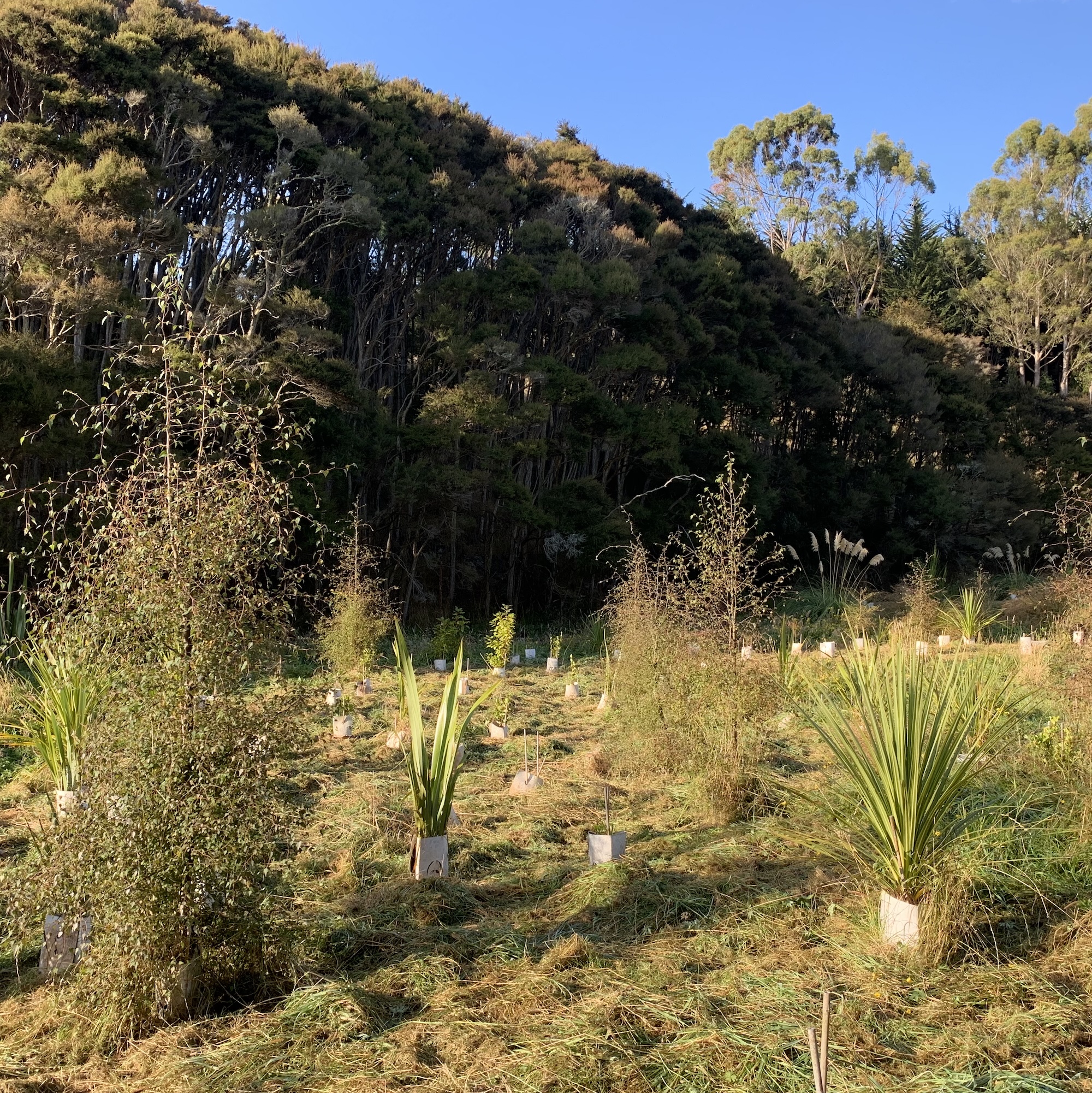
I am a thread that weaves horizontally, but not vertically. Some will think that producing a future generation is their legacy. My partner and I went another way. Along with twelve cows (in retirement), we share our lives with nine muscovy ducks (who flew in), one domineering cat (who needed a home), and numerous rumbustious native birds, and other wildlife. We have planted small native forests along the two rivers that run through our property - thousands of trees, shrubs and grasses. We are helping in the battle of climate change, and we are leaving our world a better place, a legacy for generations to come. The trees will grow horizontal roots that connect with each other, and they will grow vertically for me, some for decades, some for centuries. I will never stop longing for the little life that might have been, but my maternal love, my otherhood has found its worth in many other ways. 💙


Bibliography

Belu, Dana S. 'Enframing the Womb: A Phenomenological Interpretation 		of Artificial Conception and Surrogacy' in: Heidegger, Reproductive 		Technology, & The Motherless Age (Ch. 1), 2017. 						doi:10.1007/978-3-319-50606-7.

Bourriaud, Nicolas. 2002. Relational Aesthetics. Dijon: Les Presses du 			réel.

Napolitano, Anna. 'Study casts new light on mirror neurons' in Nature Italy. https://www.nature.com/articles/d43978-021-00101-x 24 August 2021.

Oguibe, Olu. 2004. The Culture Game. Minneapolis: University of 				Minnesota Press.

Porter, Andrew. 2023. The Disappeared. New York: Vintage/Penguin Random House.

Reardon, David C. 2018. The Abortion and Mental Health Controversy: A 		Comprehensive Literature Review of Common Ground Agreements, 		Disagreements, Actionable Recommendations, and Research 				Opportunities. SAGE Open Medicine 6:2050312118807624–				2050312118807624. https://doi.org/10.1177/2050312118807624.

Said, Edward W. 2003. Orientalism. London: Penguin. Originally 				published: London : Routledge & Kegan Paul, 1978.

Salmond, Anne. 2017. Tears of Rangi : Experiments across Worlds. 			Auckland, New Zealand: Auckland University Press.
‘Otherhood is a vibrant antithesis to the assumption that only biological motherhood can fulfil a life and a testament to the various connections that shape our lives.’
Sara Bucher NZ review of books
 Bice Grace Lapin